“Mosel lovers of refined and playful wines have a new star to put on their radar screen!” –Mosel Fine Wines
If the name Max Kilburg came a bit out of the blue in the fall of 2019 and the spring of 2020, certainly no one expected he would so quickly rise to the most elite levels of Mosel winemaking. The quote, above, is only one gushing line from the Mosel Fine Wines reviews; we’ve included a few more, you can read them below.
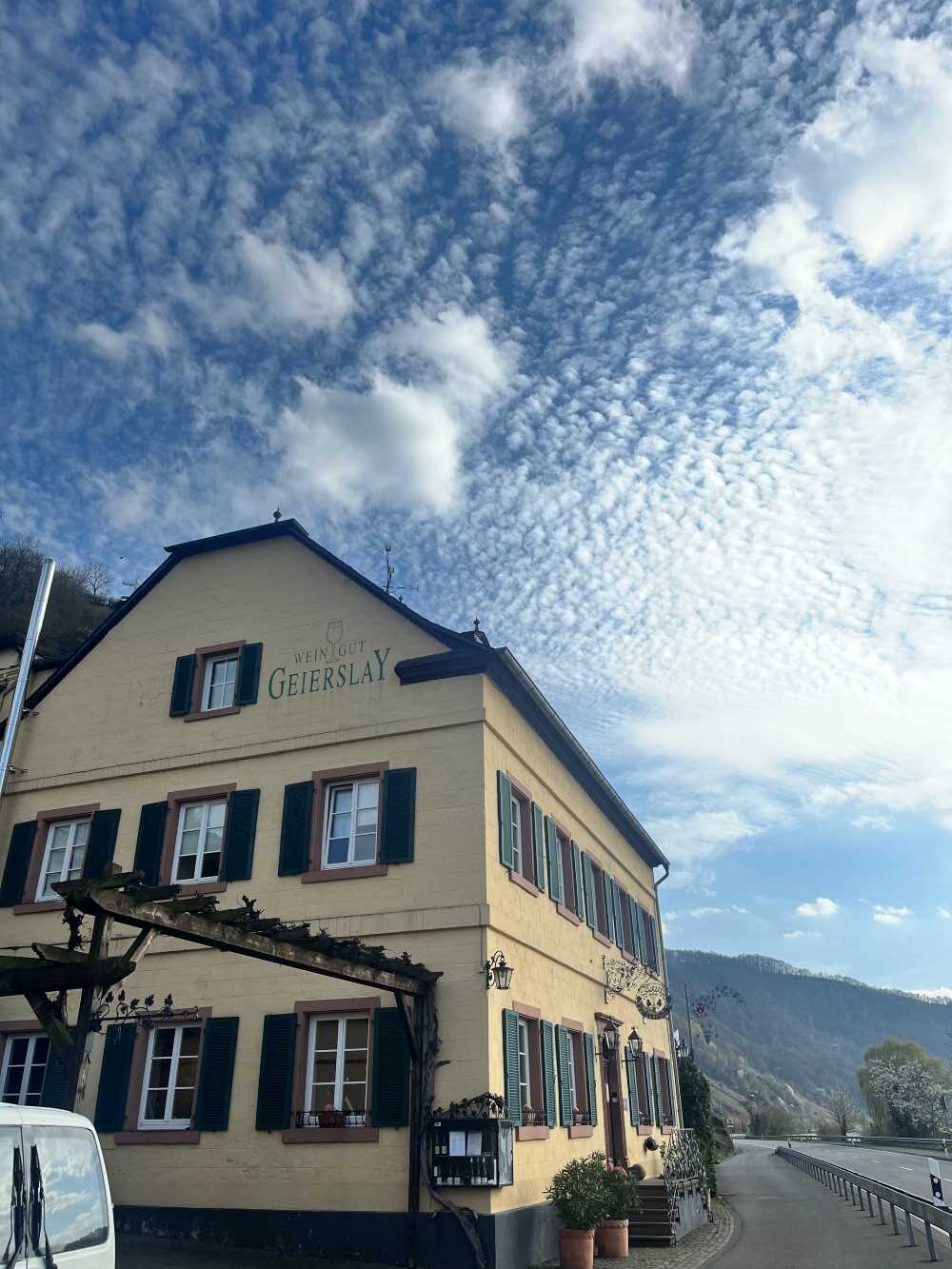
We first heard of Max when he was working with Julian Haart a few years ago. Soon after this time with Julian it was made official, Max would take over his family’s historic estate, Geierslay, as the 20th-generation winemaker.
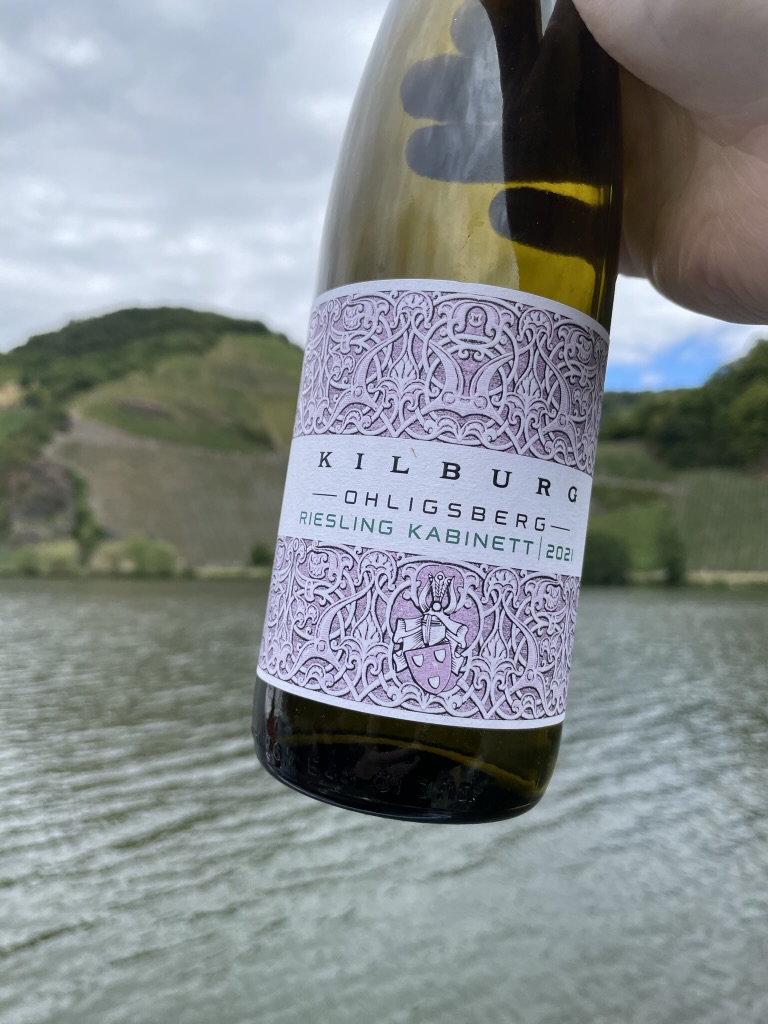
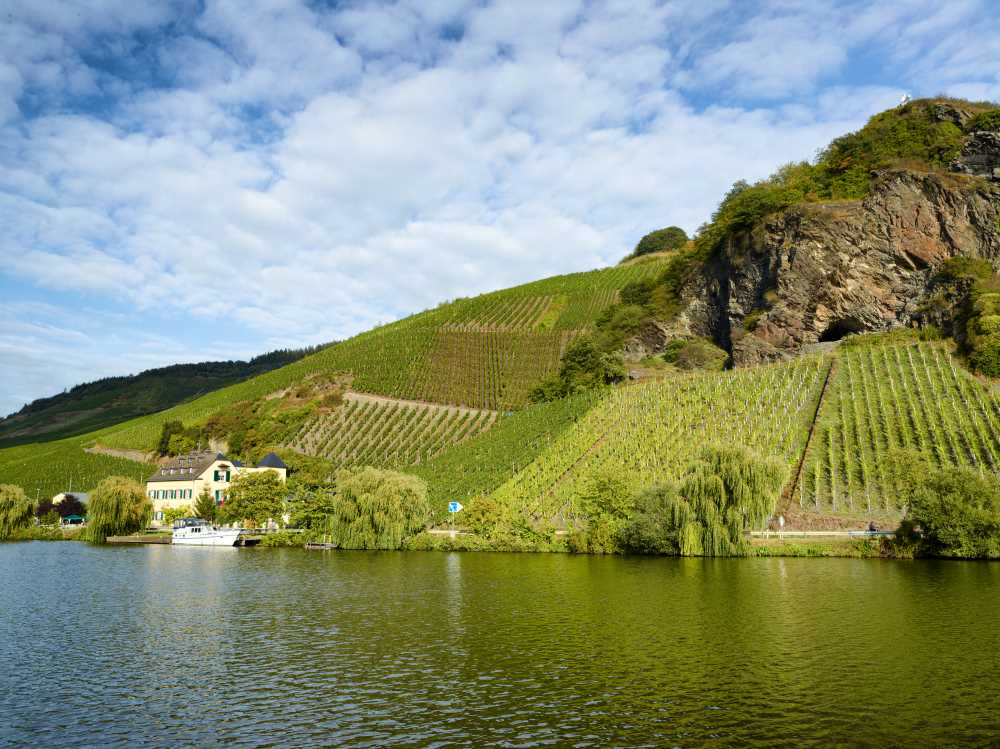
Then, Max acquired an older-vine parcel in the Grand Cru Ohligsberg, the most famous site rising up and around his hometown village of Wintrich. And then we heard about his own small line of wines, sourced from less than two hectares, total, in both the Ohligsberg and the Goldtröpfchen vineyards. In the following years he added micro-parcels in Wintrich’s Geierslay vineyard (yes, this is the name of a vineyard and of his family estate, presumably named after the vineyard) and the less-well-known yet hugely impressive site Treppchen vorm Berg. He has since begun working with a little Pinot Noir, planted by his father decades ago in the Ohligsberg vineyard.
Yet I get ahead of myself.
In the spring of 2020, trapped as we were in our homes, in quarantine like everyone else, the reviews were all we could get our hands on. They made my mouth water. They sounded like exactly the style of wines we love: “The dry wines are gorgeous, light, intense and bone-dry. The Kabinetts are firm, precise, racy and hugely profound,” wrote Mosel Fine Wines.
I mean, truth be told, we love most anything “hugely profound.”
And so, I emailed Max and begged for samples. He got them together quickly enough, though international shipping was a mess. By the time we tasted through everything, Max was long sold out of 2019.
So we began with the 2020ers.
By the spring of 2022, with the 2021ers coming to market, rumor had spread – wines that we had sold for $25 began popping up online in auctions for $60-$100. Then, of course, the gray marketers swooped in, smelling money. Honestly, it all went way too quickly.
Things have leveled off a bit now, which I think is a good thing. The wines are still psychotically good, glossy and saturated with fruit and mineral – they are neon-colored billboards to the majesty and finesse available only to the Mosel. They are still just absurd values; they are more or less available, though you do have to look around a bit.
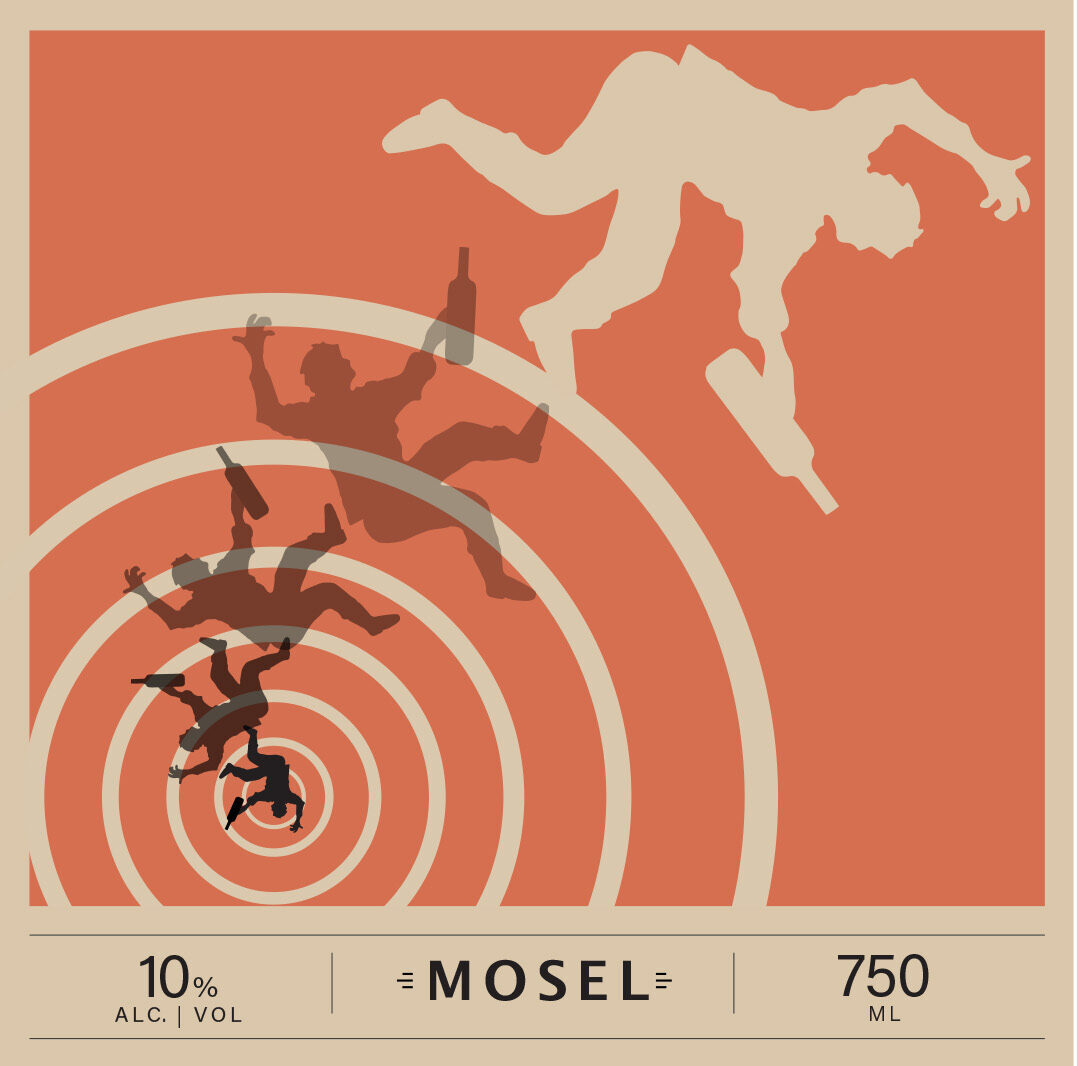
I should also mention the collaboration we work on with Max, the Vertigo Riesling, the label of which is shown above and to the right. I’m really proud of this bottle.
In the world of German wine, it is beyond easy – is is friction-less – to go to a big cooperative, a factory, and ask them to design you a wine. You can specify style, flavor – hell, you can tell them how much acidity and residual sugar you want. You can tell them how much you want to pay. They enter all this information into their mainframe, spit you out some samples in test tubes, and voila. You pick your sample and tell them how many thousands of liters you want. All you have to do is design your label.
Of course it’s soulless, non-human, and undermines the very things we want to support – namely the growers.
What is much more work, what is much less efficient, is to work with a trusted winemaker, like Max, and ask him to speak to the older growers in the village, to visit them, to honor them, to taste their barrels and then to pay them a higher, fairer rate then the cooperative does. Max then does the blending, oftentimes with juice from his own Geierslay estate as well, and we have a very well-priced, electric, honest, Riesling that speaks of place (all the wine comes from the village of Wintrich), made by a real human, with a real human sensibility.
Sure, it may be priced closer to a bulk bottling, but it is not a bulk bottling.
We are proud of this.