On Friday, July 22nd, 2022, our friend, the Mosel grower Daniel Vollenweider, passed away.
A tribute to this immutably strong man, a giant in the Mosel and beyond, can be found here.
Daniel was diagnosed with late-stage prostate cancer in July of 2019. While most of Daniel’s close friends and colleagues knew that he was sick, it never felt like something he wanted discussed. He was an intensely private person and he wanted neither sympathy nor pity.
He wanted to work in his vineyards; he wanted people to taste the wines without distraction.
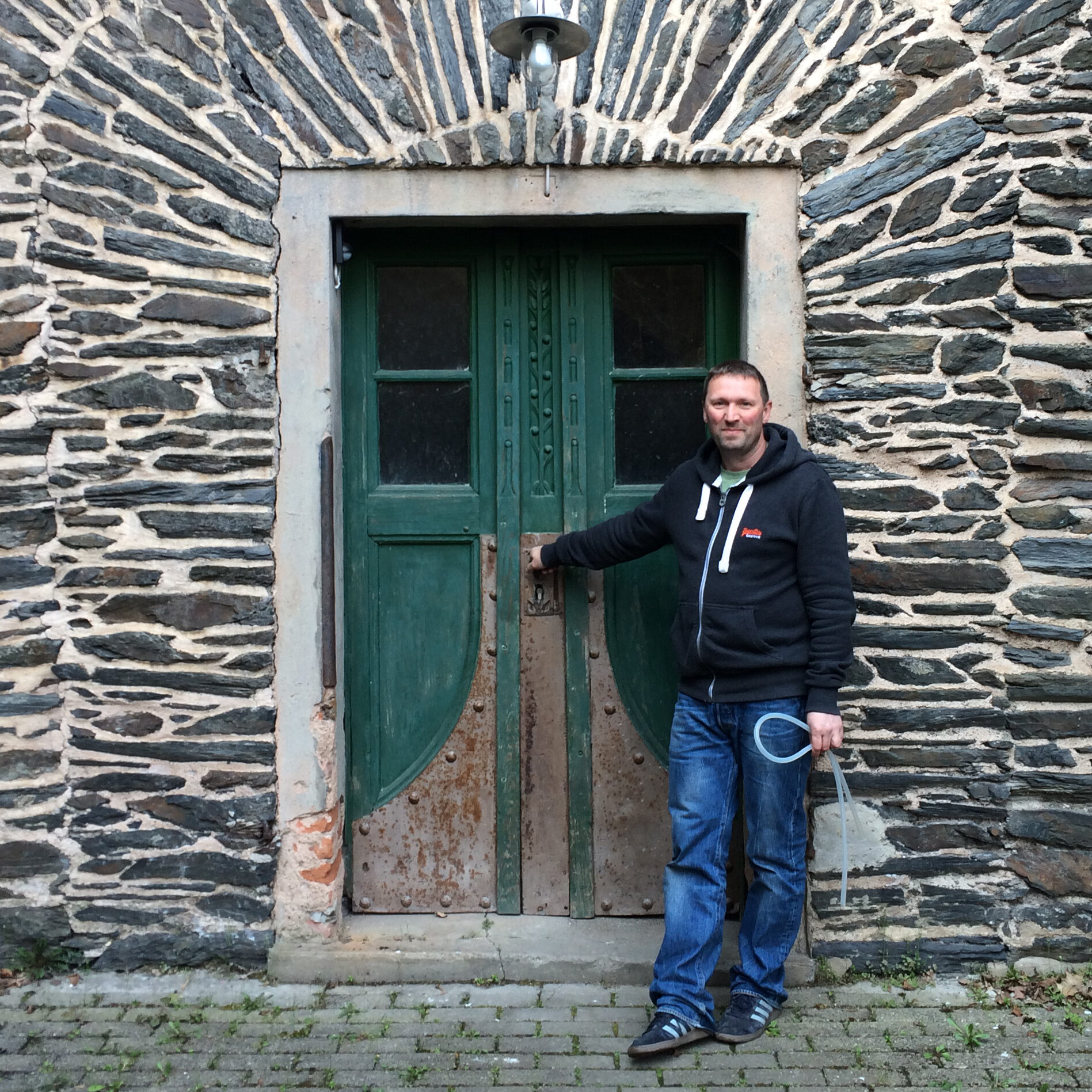
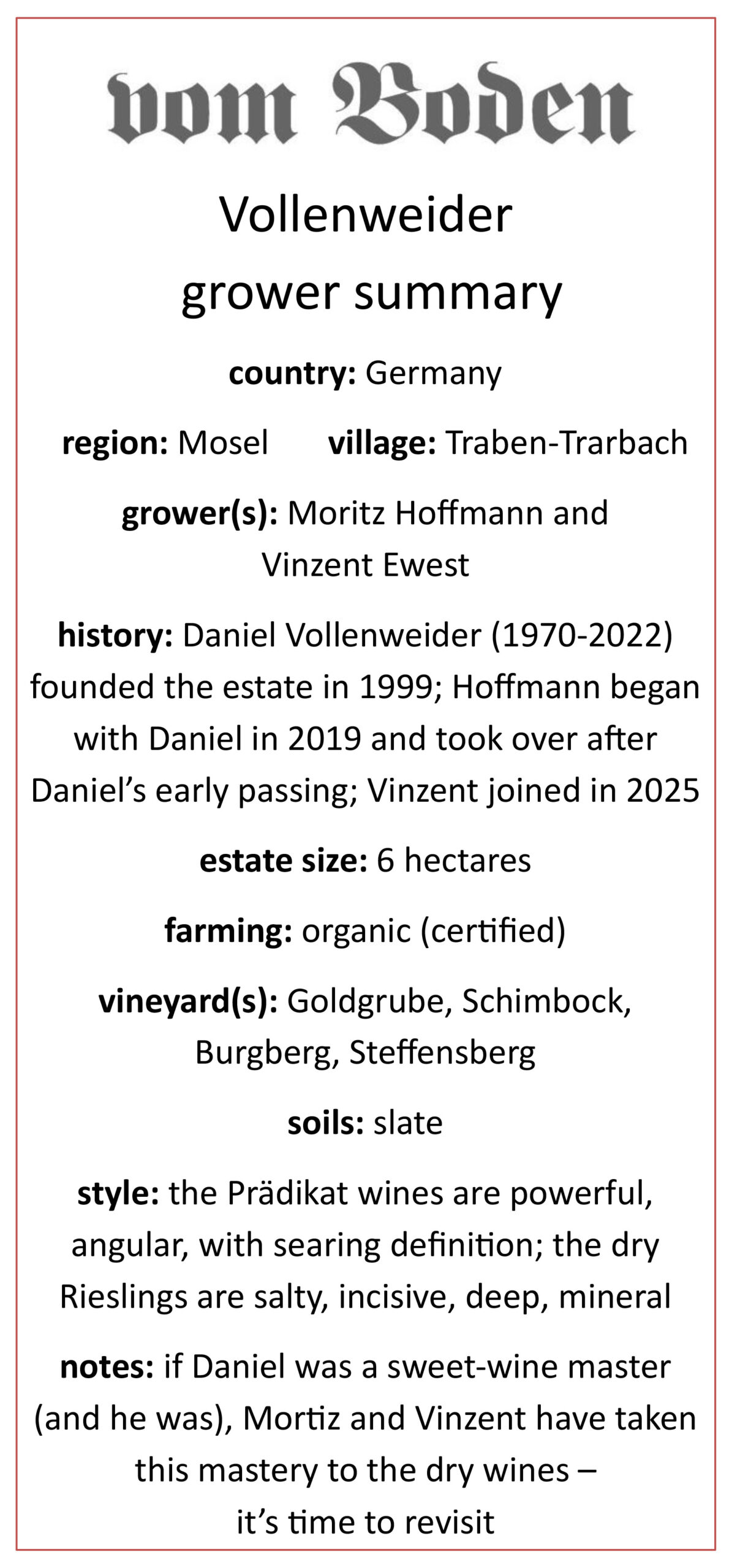
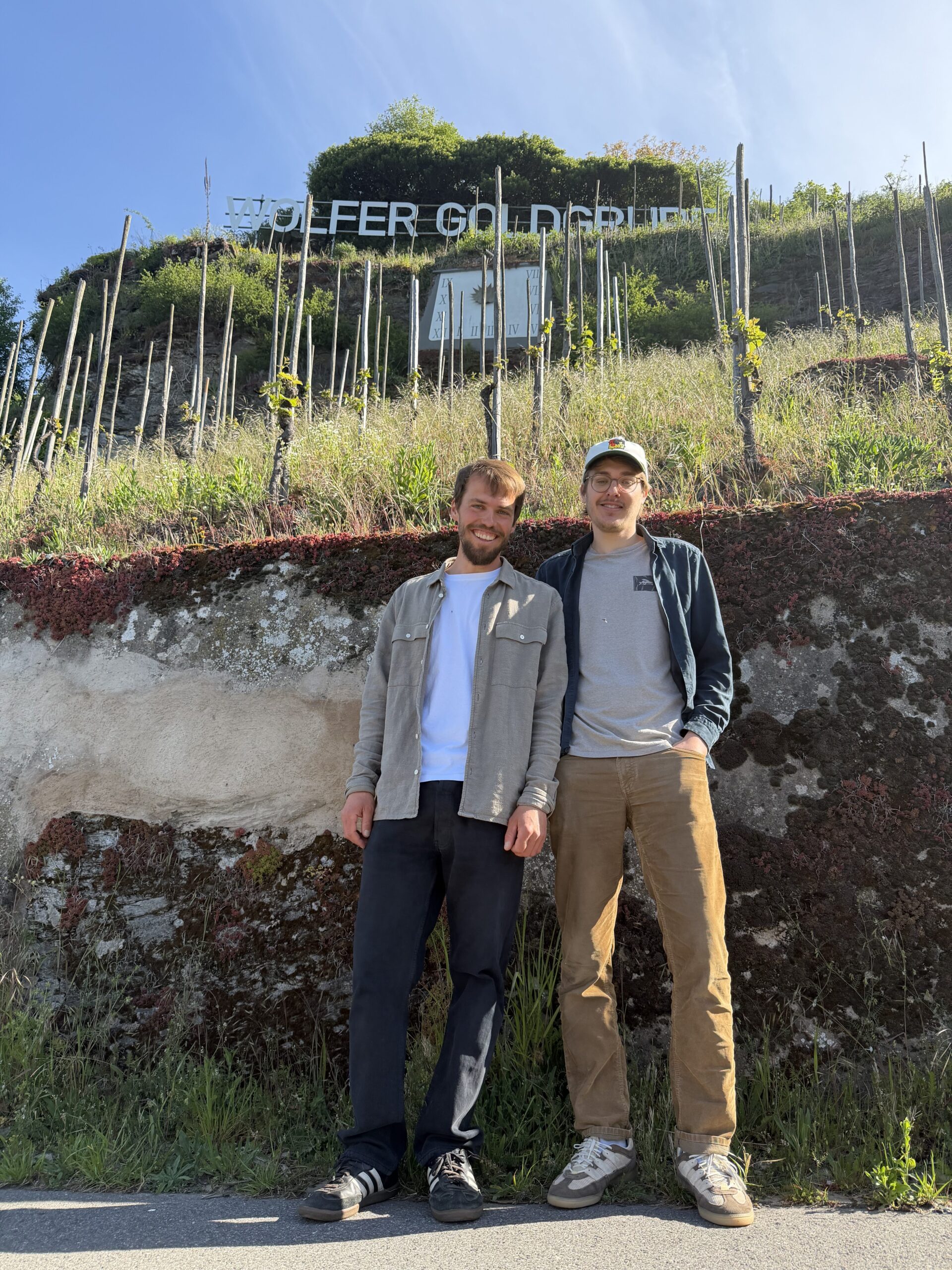
Daniel did, however, know that he would need help. Working around six hectares of steep vineyards alone through the rigors of chemotherapy would just not be possible. So he made the young Moritz Hoffmann, pictured below, a partner of the estate already in 2019. From the very first time I spoke with Daniel after the diagnosis it was already obvious that he found a lot of comfort in the fact that the estate would continue – that it would have a future.
I’m not sure either of us, to be perfectly honest, could imagine how serious, how absolutely brilliant, the future of this estate would be.
At the moment, I don’t know if there is a more exciting, more dynamic, more brutally honest Mosel estate. I’m not saying these wines are easy – in fact exactly the opposite – but I’d include the line here I penned for the young Julian Haart thirteen years ago, believing deeply in his wines years before they became the blue-chip bottles they are today: “These are wines of consequence.”
To be perfectly honest, Moritz was, for me at least, easy to underestimate. He’s young, and he looks even younger than he is with a boyish glow highlighted by the fact that he (as with Daniel before him) rarely wears anything other than sneakers, an old zip-up hoodie, and a baseball cap.
Yet Moritz has proven to be incredibly insightful, thoughtful, and savvy. A description I once read of George Washington comes to mind: “He saw things as they were, and not how he wanted them to be.”
At parties and winemaker gatherings, Moritz rarely speaks too much; he lets others do the talking, though by this point I’ve heard from a number of other winemakers in his circle that he is one of the best tasters they’ve ever encountered.
Which is to say he’s attentive and perceptive. Yet I would actually expand this general idea to beyond just tasting wine. As he’s considered changes at the estate, there are few things that Moritz has said to me that weren’t true, even if they were sometimes hard for me to see at first, right there in plain sight.
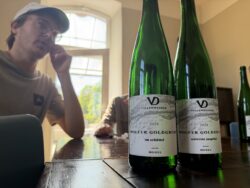
The first is that Moritz realized, quite quickly, he could not do this alone. In the fall of 2025 he brought on a partner to work with him, 50/50, at the estate: Vinzent Ewest. Moritz already knew him well; Vinzent and he had worked together at Vollenweider over the years. Vinzent was there in 2018 and 2020. After working with de Montille in Burgundy from 2021 to 2023, Vinzent then returned and worked part time at Vollenweider from 2023 to 2024, coming on full time in 2025.
Second, Moritz realized he and Vinzent had a slightly different vision for the estate, for the style, than Daniel. I think they realized that it wouldn’t work to copy Daniel’s style, to make “reproductions,” as best they could, of what Daniel had done before them. They had to go forward, honestly, authentically, with what they wanted.
They realized this would be most effectively communicated by making their adjustments, however bold, decisively. So for their first vintages working together as a team (2024 and 2025), they have changed the internal organization, the hierarchy of their bottlings, at least for the dry Rieslings.
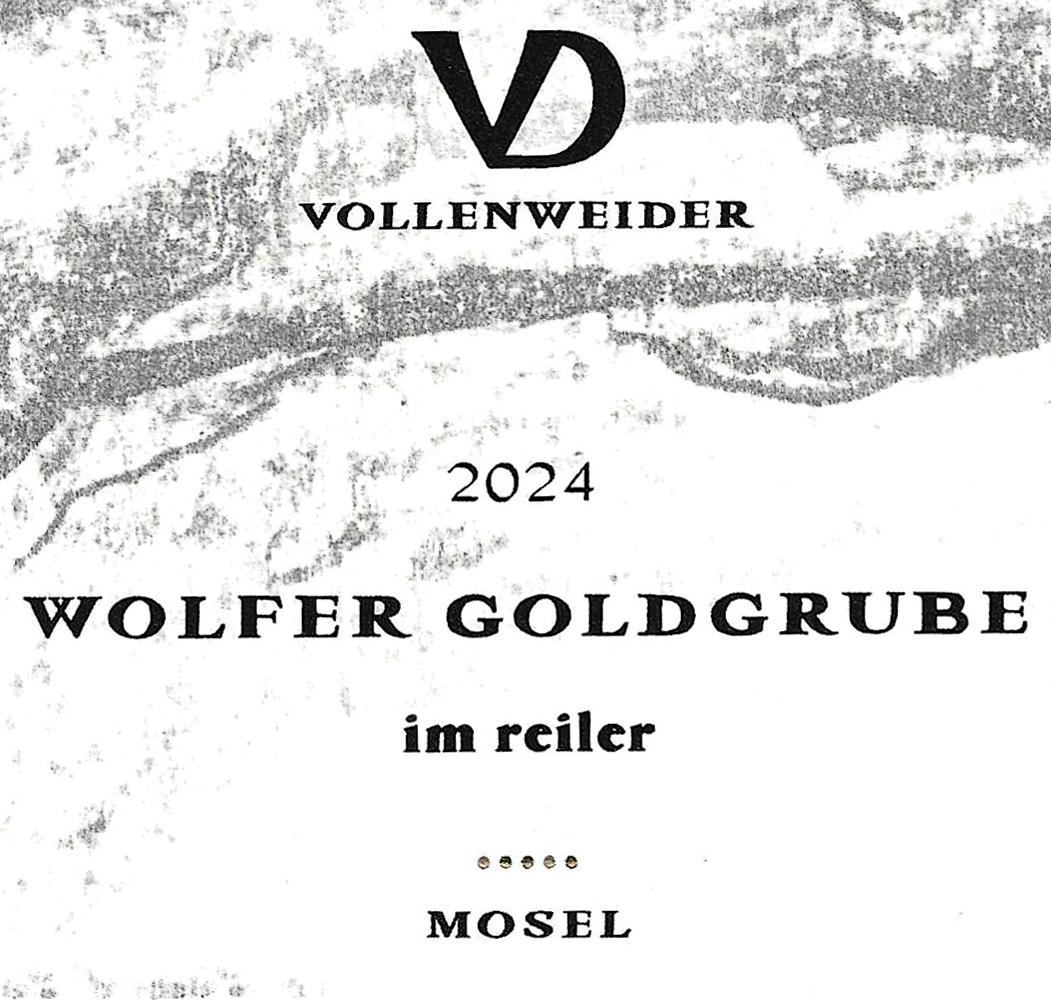
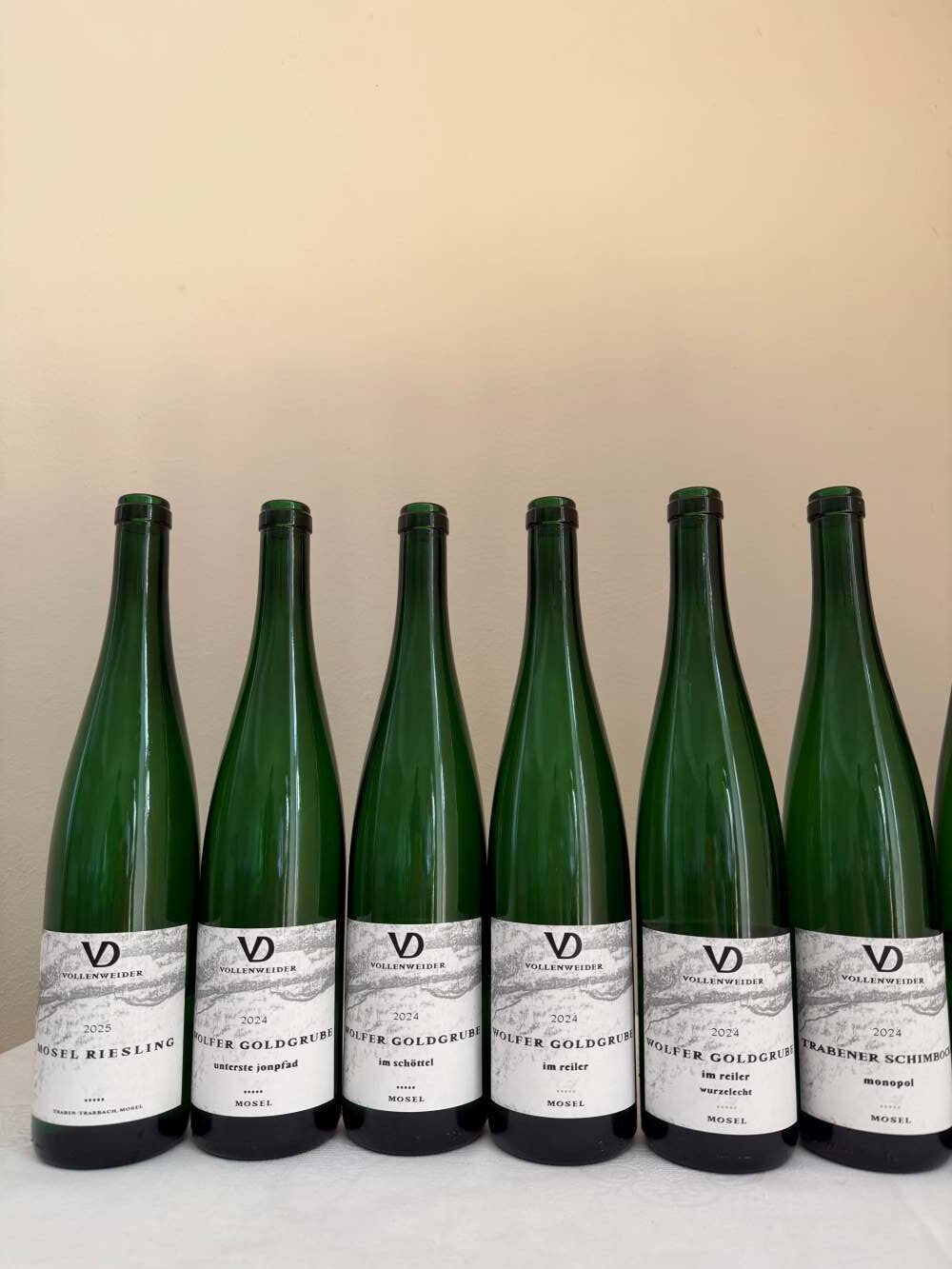
They have also changed the labels. Moritz has said he just wanted them to be raw, rough – like their style. Almost a punk-rock DIY aesthetic, like they just came off the fax machine. I dig it.
As for the hierarchy, the changes make things both more basic and a bit more complex. I like it all.
To start, Moritz said he felt like people just didn’t get the “Felsenfest” – it was a clever German wordplay that never translated in the non-German-speaking world. I agree. They are returning to a more simple, more essential way of looking at their wines, based on the general appellation and then vineyard designations. So the “Felsenfest” will just be called “Mosel Riesling” going forward. It is, after all, an “appellation-level” bottling from the Mosel.
Second, as nearly all of their holdings are either in the Goldgrube, or listed as single-vineyard wines (the Burgberg, for example, most often a Kabinett, and the Schimbock, most often a dry wine), they felt like a village-level bottling for them didn’t make sense. It’s all “Grand Cru” Goldgrube, after all. So the “Wolfer” village-level bottling is gone.
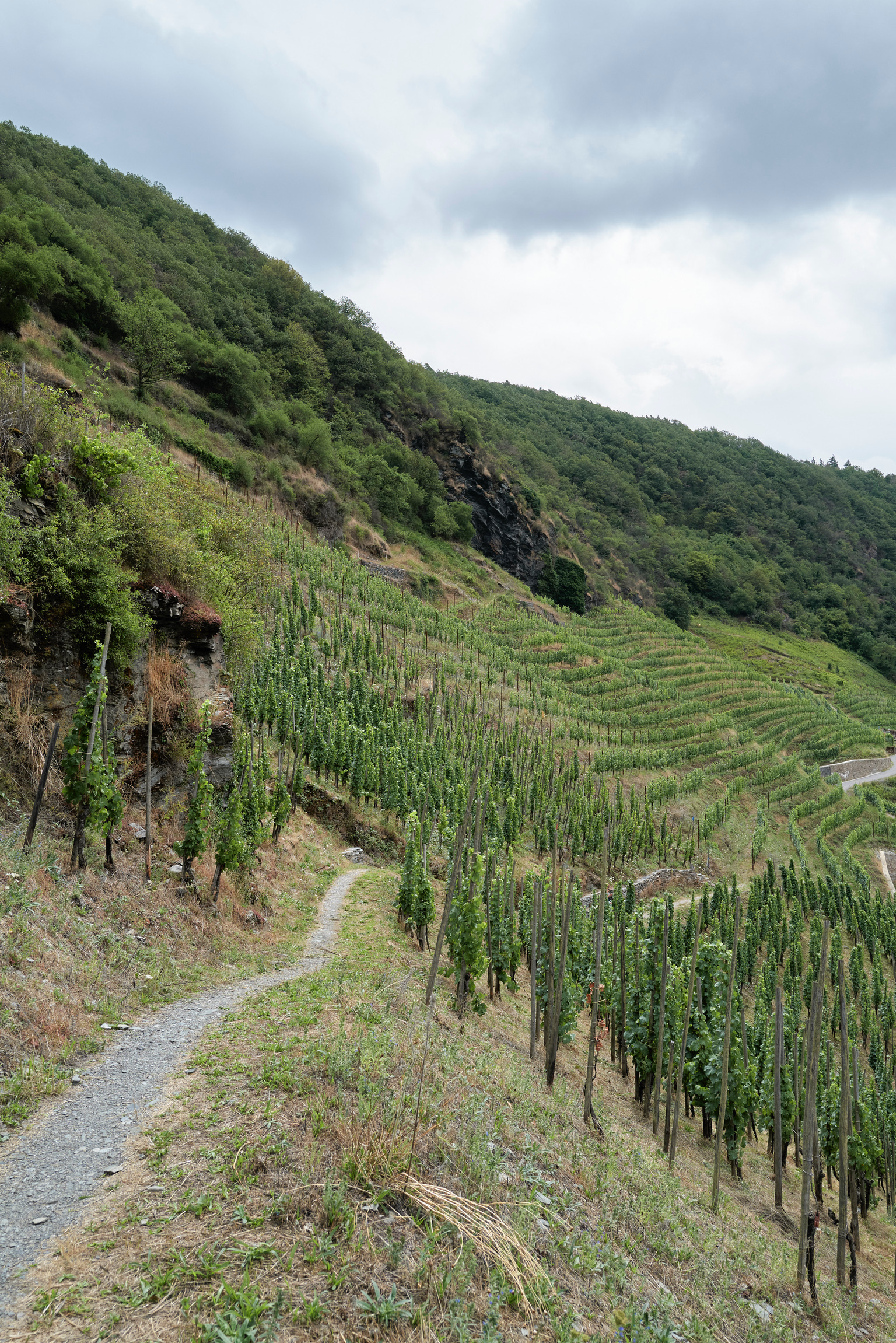
And more than that – not to get too deep into the weeds, though how can we not (?) – their 4.8 hectares in the Goldgrube are distributed across different parcels that have very unique terroirs and thus very different expressions. (The Goldgrube, just FYI, is comprised of 11 unique parcels covering 7 total hectares.) So, in a move that is both very honest and straightforward, as well as romantic and complicated, they will now bottle, essentially, three (though really four?) single-vineyard dry Rieslings from the Goldgrube. We go into each wine in the “wines section” of the website (see the button above and to the right or click here), but I can give a quick run-through here.
First is the bottling that will be called Goldgrube “Unterste Jonspfad,” meaning “under the path of Jon,” referring to the path (you can still see) that runs through the vineyard down to where the ferry used to be. This is the western-most site, directly next to the Schimbock. The entire 1.5 hectare plot was recultivated and replanted by Daniel in his final years. Daniel used old selection massale cuttings from both the Goldgrube and the Schimbock. This is a relatively cool site, yet it has a finer soil and good water, so it makes what might be called the juiciest of the dry Rieslings.
Second, there is the Goldgrube “Im Schöttel.” The word Schöttel comes from the German word “Schüttung,” meaning scree or debris, referring to the massive stone cliff overhead and the rather-too-constant barrage of rocks that shower down from it into the vineyard. Here the soil is much poorer, much more stony than in the “Jonspfad.” Yet the site is a touch more southern-facing, so while the wine is denser and more saline than the “Jonspfad,” it is also more generous, more effusive.
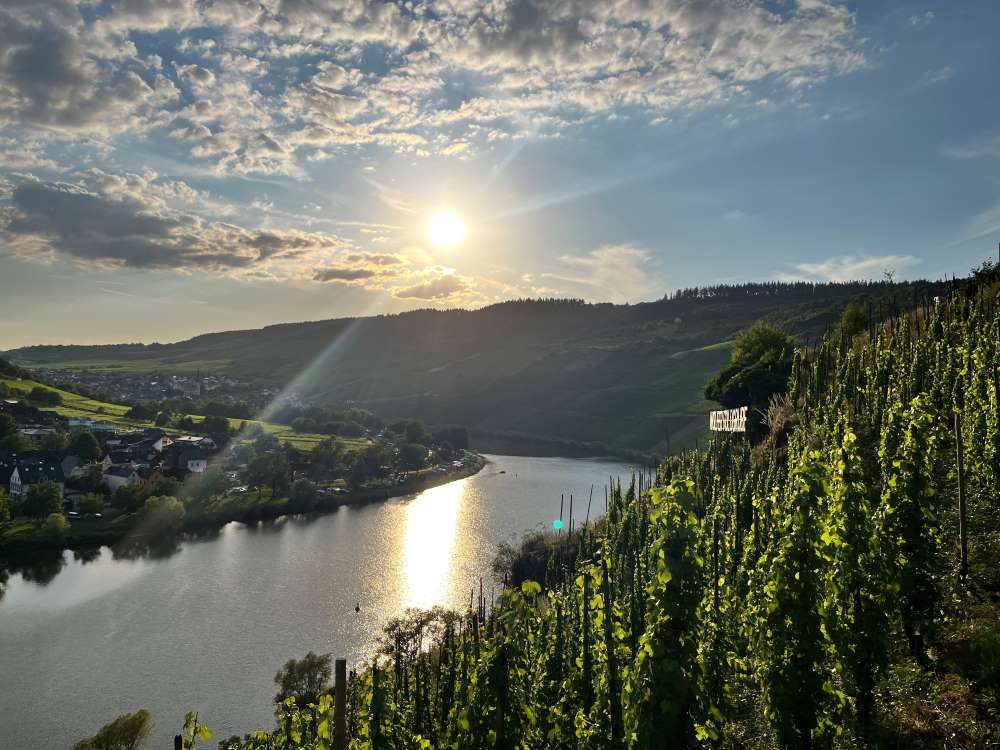
Finally, there will be the Goldgrube “Im Reiler.” This is the parcel that sits more or less around the sundial in the vineyard. It has never been “reorganized” – that fun-to-say German word “Flurbereinigung” – and so it retains not only the odd terrace or two, but also very old vines, many of which are ungrafted. This bottling aligns, more or less, with the Goldgrube Grand Cru the estate has been bottling for some years.
If all this wasn’t beautiful and inane enough, they will also, when they can, bottle an “Im Reiler” wurzelecht – meaning sourced completely from the oldest, ungrafted vines in the vineyard, which can be between 80 and 150 years old. This aligns, more or less, with the “Aurum” bottling they’ve done in certain years in the past. I like Moritz’s writings here: “For this wine, only the very oldest vines are selected and vinified separately from the rest of the parcel. Some of these vines are so ancient that in certain years they produce no fruit at all, sustaining themselves with leaves alone; in other years, they may bear just a single cluster. These are truly primordial vines.”
The Prädikat wines remain in most ways, as they were. There are few who are as gifted as Daniel was with Prädikat wines. Sure, there are people – Egon Müller, J.J. Prüm, Willi Schaefer, Julian Haart – who can make Kabinett as well as Daniel did; each has their unique style.
No one, however, can make a Kabinett better than Daniel could. That is as close to a fact as one can get in this subjective business.
Moritz and Vinzent know this, and so they are changing very little here, though I would say that while the wines have lost none of their energy, their bounce, they have gained a sharper, less forgiving edge to them. Sometimes, as the acid-mineral-recoil of the Prädikat wine hits, I ask myself: “Can acidity have tannin?” These are almost shocking wines.
As for the processes and style for the dry wines, even if Moritz and Vinzent made only very small changes in the cellar, they are not insignificant.
The first important change was reducing the amount of botrytized grapes allowed in the dry wines to zero. Daniel appreciated the glaze and density that a little clean botrytis could offer. Moritz and Vinzent want the wines to be pure mineral, to flaunt an almost painful (in a delicious way) austerity.
As early as 2020, with Daniel’s blessing, Moritz brought the picking time up a bit earlier and reduced the amount of skin-contact for the dry Rieslings. Every vintage since has been a significant step forward.
People are noticing.
Now, I don’t have any crystal ball and, honestly, what-the-fuck do I know? But if I had to guess the next Mosel estate to go cult, I’d probably put my chips here. For the very, very serious taster, these wines will be a revelation.
Daniel must be as thrilled as I am.