
Can you say “Versteigerung”? We knew you could
For a decade, vom Boden has been offering complete services for the German Versteigerungen – the VDP and the Bernkasteler Ring auctions – including bidding, consolidation and importation for private collectors and institutional buyers all over the U.S.
We do not know of anyone who goes deeper here, period.
We spend an absolutely irrational amount of time talking to the growers, visiting them, tasting their auction bottlings. We seek out the trophies (which is easy and obvious) but also the values. We taste damn-near everything being auctioned and we do this for one reason only: and that reason is we love it.
This year things are a bit different: The VDP Mosel auction (where Egon Müller, Lauer, and Willi Schaefer, for example, auction their wines) and the VDP Nahe/Rheinhessen auction (where Emrich-Schönleber and Keller, for example, auction their wines) will not be held on preceding days in November.
This year, the Bernkasteler Ring and VDP Nahe/Rheinhessen auctions will be held on Friday, November 6th and Saturday, November 7th, respectively. The VDP Mosel auction will not happen until May 9th, 2027. So, for the moment, we are going to focus only on the first two.
Vintage 2025 is a blockbuster – something like 2015 or even 2005. Read our vintage report, “Vintage 2025: The Magic of the Five,” by clicking here.
Vom Boden will offer, full auction services including, once again, the most information and the leanest pricing package (a per-bottle fee for handling, not a percentage of the sale). Please sign up to receive our auction summary as well as a simple bidding form by emailing orders@vomboden.com. The deadline for bidding in this year’s auction will be Wednesday, November 4th! We will not be sending out any materials until later-October, so if you email us, you will be registered. It’s as easy as that.
If you have bid with us before, don’t worry – we got you. You’ll get an update and forms later in October.
For those of you interested, here’s a poetic/historical look at the German auctions, held once a year in the fall, that remain little understood in the U.S.
While the easy selling line is something like, “this is your chance to buy the greatest and rarest wines of Germany” – and that line is 100% true – I think it undermines, or at least takes a detour around, the beautiful human tradition of the event. It pushes to the side what’s really important about all this; like selling the Statue of Liberty based on the incredible views of the city it affords.
To understand the deeper meaning of these auctions, however, we have to know a bit of history. The German auctions – organized by growers’ associations and not by commercial auction houses – began in the mid-nineteenth century. Their purpose was simple: To strengthen the position of the small estates and to honor the very basic and magical fact that some barrels are better than other barrels. What’s important to remember here is that through the 19th and even in the early 20th century, the majority of winemakers worked their tiny plots, made relatively small amounts of wine which they sold, by the barrel, to the negociants and large bottlers who would then bottle the wine, label it and sell “the finished product.”
This process required the negociants and large bottlers to send tasters to these small growers, to sample all the barrels and negotiate the pricing and purchase. Now, as anyone who has barrel sampled knows, each barrel has its own identity. In other words, despite all our scientific advancement and technological sophistication, we have not mastered the complexity of fermentation, the unfathomable influences of a barrel, the life of a certain yeast in a certain year, the indelible fingerprint of terroir.
Every barrel is just not created equally, even if the winemaker herself doesn’t know why one tastes different than the other. It just does, and that fact is fucking magical. The tasters knew this; the growers knew this. The auctions gave the growers the chance to get the best price for the barrels – especially for the ones they thought were extraordinary.
Today, the top growers bottle their own wines. Yet the auctions continue as a way for the growers to honor the tradition and to honor the fact that some barrels, some vineyards, some parcels, are just different, better – special. Of course, the easy, rational, simple, logical and commercial thing to do would be to blend all these barrels in a larger tank, averaging out your wine as it were. Frankly, this is what happens 99.9% of the time with winemaking around the world (and there are interesting philosophical arguments as to why this is also a sort of fascinating, beautiful truth).
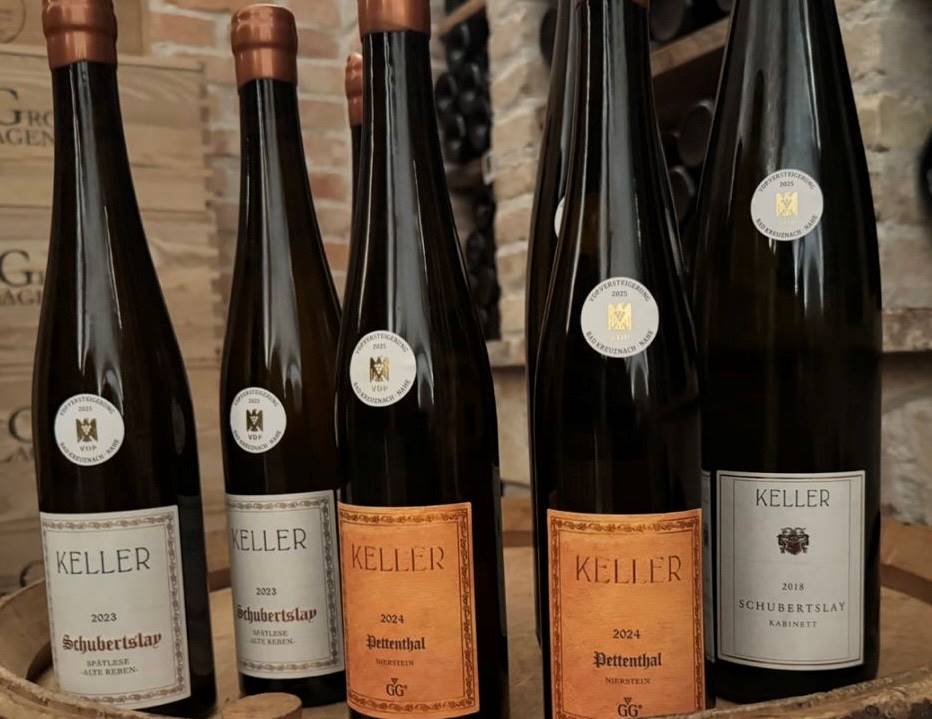
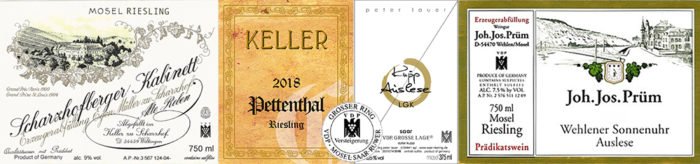
The German wine auctions, however, represent the 00.1% – the whole process is an acknowledgment of how complicated, mysterious, beautiful and ultimately unknowable, the act – the art – of winemaking really is. It is a nod to the tradition of how wines were discussed and sold before we got so ****ing efficient and slick. The German auction bottlings are unique – these are the bottlings the growers themselves believe represent their top, top wines. They will normally have a round auction sticker (see below) and a unique AP number. They are not sold through normal retail channels, though retailers can of course buy these bottles and sell them if they like.
You may have gathered this already, but I love it. It is a beautiful, honest and eccentric expression of the human spirit and of the complexity of nature.
For more information, including the most current auction books (normally released only a few weeks before the auctions), basic bidding instructions and more, email orders@vomboden.com